When the Cloud Went Dark, So Did AI
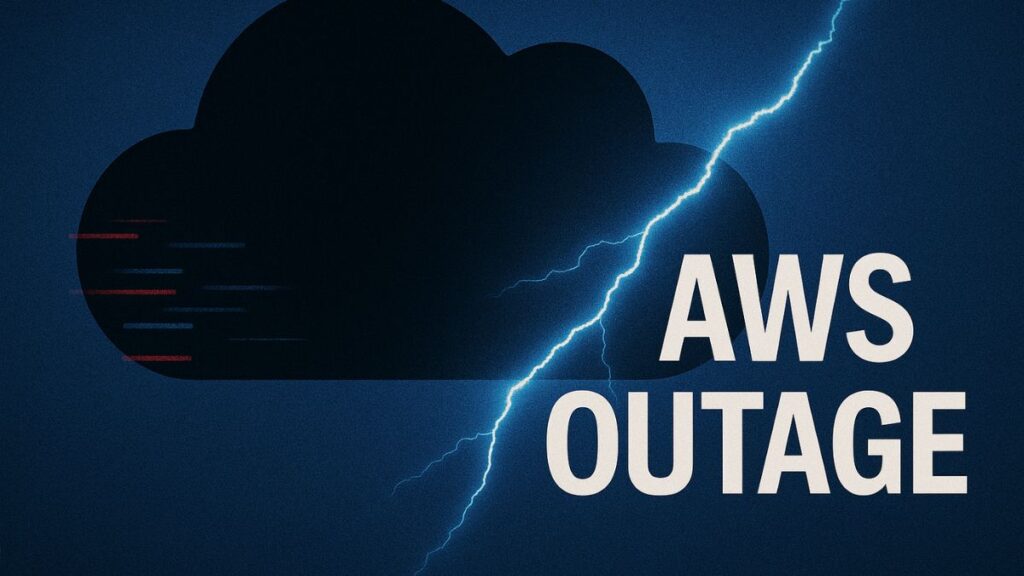
In a major disruption this week, Amazon Web Services (AWS) — the backbone of the modern internet — faced a widespread outage that sent ripples across the tech world.
But beyond websites going down or APIs failing, this outage exposed something deeper: the fragile dependence of AI tools on centralized cloud systems.
From ChatGPT to Jasper, Runway ML, and Hugging Face, several AI-powered platforms experienced slowdowns or temporary failures as AWS servers went offline. Users flooded X (formerly Twitter) with complaints — not just about AWS, but about the entire AI ecosystem’s vulnerability.
The Hidden Problem: AI’s Overreliance on Cloud Giants
Most AI tools today are built on top of cloud infrastructure like AWS, Google Cloud, or Microsoft Azure. This setup allows startups to scale fast — but it also creates a single point of failure.
When AWS goes down, hundreds of AI startups and automation tools are instantly crippled. Their data pipelines pause, inference models stall, and users face broken dashboards.
This is the dark side of AI dependence that rarely gets discussed. We celebrate “autonomous AI,” but the truth is — these systems aren’t as independent as they seem. They’re deeply tied to a few massive data centers owned by just three companies.
What Happened During the AWS Outage
According to early reports, the outage began in the US-East-1 region, one of Amazon’s most critical data zones. Within minutes, multiple AI APIs started returning error codes.
- Jasper AI users reported failure to generate responses.
- AI image tools like Runway and Leonardo AI lagged heavily.
- Some enterprise bots and workflow tools built on AWS Lambda went completely dark.
AWS later confirmed that a “network connectivity issue” had affected services globally. While the issue was resolved within hours, the chain reaction it triggered in the AI world was hard to ignore.
A Wake-Up Call for AI Startups
This outage was more than just downtime — it was a reality check for the fast-growing AI ecosystem.
For founders and developers, it highlighted the urgent need to:
- Diversify hosting across multiple cloud providers
- Build local or hybrid inference systems
- Explore decentralized AI infrastructure (like Golem or Akash Network)
The idea is simple: if one cloud fails, your entire AI platform shouldn’t.
As one developer posted online —
“We built AI to be smarter than humans, yet it can’t survive if one AWS region goes down.”
The Future: Decentralized or Multi-Cloud AI
The AWS outage might just push the next big shift in AI infrastructure. Startups and researchers are now discussing multi-cloud AI models, where workloads are split across AWS, Google Cloud, and independent networks.
Even more interesting, some AI communities are exploring decentralized hosting — where computing is distributed among smaller nodes instead of a few big servers.
If this trend catches on, we might see a future where AI tools become truly autonomous — not just in function, but in survival.
The Bigger Picture
This week’s AWS outage was a reminder that even the smartest AI tools are only as strong as the servers that host them.
It wasn’t just downtime; it was a glimpse into the risks of building the future of intelligence on a few corporate clouds.
As the AI industry grows, one question will keep getting louder:
Can we trust AI that can’t stand on its own?

With years of experience in career guidance and skill development, Kapil shares practical insights on AIToolClouds.com, a platform designed to empower professionals, students, and freelancers with valuable knowledge.